


THE LAST VOICE OF N|uu: Ouma Katrina’s Battle to save a 20,000-Year-Old Language
By: Olwethu Mthethwa
In a quiet corner of South Africa’s Northern Cape, an elderly woman named Ouma Katrina Esau carries an entire language on her shoulders. She is the last known fluent speaker of N|uu, one of the world's oldest and most endangered languages. With her, the knowledge of a 20,000-year-old linguistic heritage teeters on the edge of extinction. Yet, despite overwhelming odds, Ouma has dedicated her life to preserving and teaching the language of her ancestors, refusing to let it fade into silence.

N|uu is a “click language” that belongs to the Tuu language family, spoken historically by the Khomani San people, indigenous hunter-gatherers of Southern Africa. It is a language deeply intertwined with the land, embodying oral traditions, songs, and survival knowledge passed down through generations. Linguists believe that languages like N|uu are among the oldest on Earth, with roots stretching back at least 20,000 years. The complex click consonants, which can involve up to five different types of clicks, make the language not only linguistically unique but also a living reflection of humanity's ancient past. For millennia, the Khomani San roamed the Kalahari Desert, living in harmony with nature and expressing their worldview through N|uu’s intricate sounds and rich oral storytelling traditions.
The decline of N|uu is a tragic story of colonisation, cultural erasure, and forced assimilation. As European settlers expanded across Southern Africa, San communities were displaced from their ancestral lands. Missionary schools, under colonial and apartheid regimes, suppressed indigenous languages and imposed Afrikaans and English as dominant languages. San children were often punished for speaking N|uu, and over time generations grew up without learning their mother tongue. By the late 1990s, N|uu was considered critically endangered, with only a handful of elderly speakers remaining.
Born in 1933, Ouma Katrina Esau grew up speaking N|uu as her home language. But even she was forced to attend a school where she was forbidden from using her mother tongue. Despite this, she never let go of her linguistic identity. After witnessing the death of the second-to-last fluent speaker in December 2021, Ouma Katrina becomes the last living person fluent in N|uu. Rather than accepting the slow death of her language, she has taken extraordinary steps to preserve it. Working with linguists and cultural activists, she has been documenting the language, recording its vocabulary, and helping to compile a digital dictionary.
Together, they have worked on creating a standardised orthography (writing system) for N|uu, which had been purely oral for thousands of years. Ouma established a small N|uu Language School in her backyard where she teaches children basic N|uu phrases, songs, and stories, passing on what knowledge she can. She has co-authored a children's book in N|uu to make the language accessible to young learners. While none of her students are yet fluent, the seeds of revitalisation have been planted.
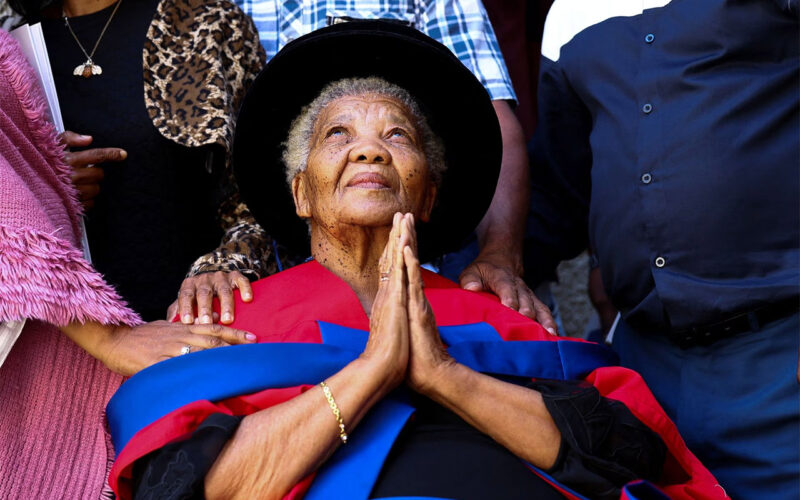
Ouma's story has captured global attention, highlighting the broader issue of endangered languages. According to UNESCO, nearly half of the world's languages are at risk of disappearing by the end of this century. Every time a language dies, humanity loses a unique worldview, cultural memory, and irreplaceable ecological knowledge embedded in that language. The fight to save N|uu is not just a local struggle; it is a reminder of the devastating impact of cultural suppression and the urgent need to protect linguistic diversity. Efforts like Ouma Katrina’s emphasise the role of community-driven initiatives in language revitalisation. Her legacy is a testament to the resilience of indigenous knowledge and the power of one person's dedication to preserving their identity against all odds.


Comments